


AuraDrama: Short Drama HD
3.04.00 Reviews
App Specs
- Version
- 1.0.2
- Updated On
- License
- Free
- Downloads
- 100,000+
- Developer
- HOANG PHUONG TECHNICAL SERVICES AND TRADIING JSC
- Categories
- Entertainment
- Platform
- Android
Screenshots
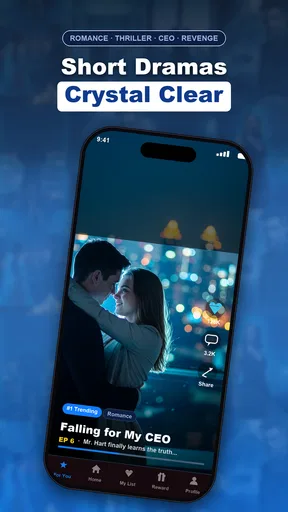
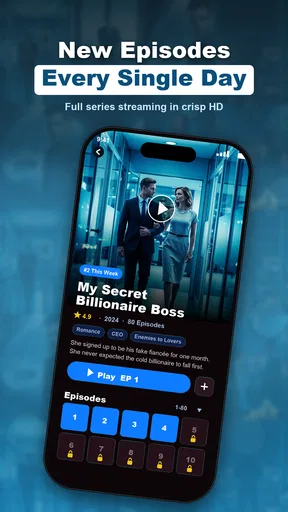
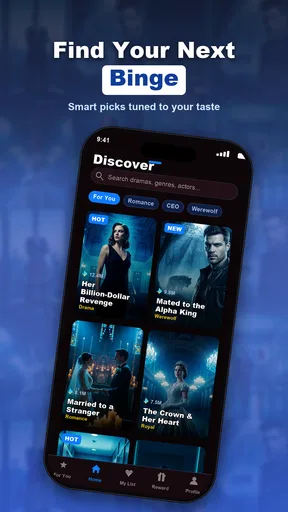
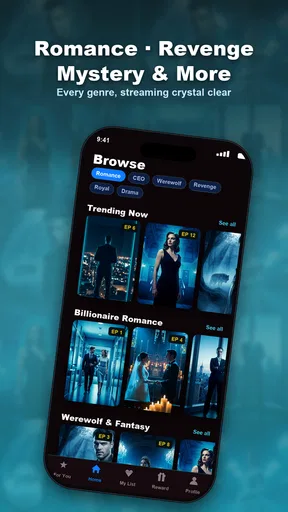
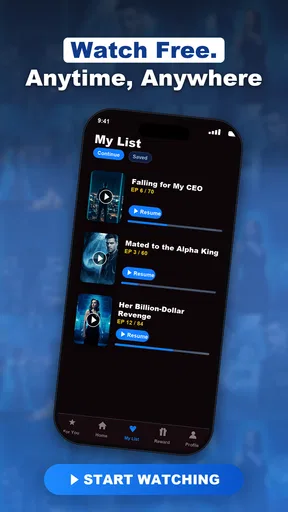
 Analysis by AppCompare
I approached AuraDrama as a quick entertainment app rather than a replacement for a full television service. Its focus is short-form drama in HD, with fresh episodes intended to keep the daily viewing habit alive. That makes the app immediately appealing when I have only a few spare minutes, but it also means the experience depends heavily on how well my phone and network handle repeated video playback.
The app is free, aimed at Everyone, and belongs to the entertainment category. It comes from HOANG PHUONG TECHNICAL SERVICES AND TRADIING JSC, has passed the 100K+ install mark, and is currently on version 1.0.1. It requires Android 7.0 or later, so it remains accessible on many older devices. After spending time with it, my impression is straightforward: this is best for viewers who enjoy compact dramatic stories and want something easy to open during small gaps in the day.
How AuraDrama feels when the connection is doing the work
The central experience is simple: open the app, find a short drama, and start watching. In practice, the quality of that experience is closely tied to connectivity. HD video is attractive on a modern phone, especially when faces, subtitles, and indoor scenes are clear, but high-quality streaming naturally places more pressure on a mobile connection than reading text or browsing still images.
I noticed that the first few moments of a viewing session matter more here than they do in many other entertainment apps. If the connection is stable, the app can feel pleasantly direct. I can move from browsing to watching without turning the process into a project. If the network is busy, the same short episode loses its advantage because waiting becomes a larger part of the experience.
That is the first important trade-off: short episodes save time, but they do not remove the need for a dependable connection. A brief video that pauses several times can feel more frustrating than a longer program that plays continuously. For that reason, I would use AuraDrama on a reliable home network or a strong mobile signal when possible, particularly if I care more about uninterrupted viewing than about saving every megabyte.
The daily-episode approach also changes how I browse. Instead of treating the app like a huge library that I must search for hours, I can return regularly and look for something new. That rhythm suits people who enjoy following a continuing story in small portions. It is less suitable for someone who wants to download a complete season, watch a long film, or control every part of a carefully planned viewing schedule.
Compared with conventional television, the app gives me more freedom over when I begin. Compared with large streaming platforms, it feels more focused on quick discovery and compact storytelling. The benefit is less commitment. The cost is that viewers who expect an enormous catalog, advanced organization, or a broad mixture of entertainment styles may find the experience narrower.
Worth Reading Before You Choose

EA SPORTS FC Mobile 26 Is a Bigger Football Game, but It Takes Time

Flipboard Shows What News Apps Must Do Beyond the Feed

Switching to Android Auto Means Rethinking Your Driving Routine

Google Calendar Makes a Crowded Week Easier to Manage

Ludo King Makes the Most of the Minutes Between Plans

Baby Panda World Brings Quick Play to Modern Phones, but Its Game Library Feels Busy
Why short episodes work well on a phone
AuraDrama makes the most sense in mobile situations where attention comes in small pieces. I can imagine opening it after lunch, during a quiet break, or while waiting for an appointment. The format is more realistic for those moments than starting a full-length movie that I may have to abandon after ten minutes.
There is a useful psychological difference between “I have time to watch something” and “I have a few minutes to spare.” The first invites a major streaming service. The second suits a short-drama app. AuraDrama fits the latter situation because it lowers the commitment required to begin. I do not need to reserve an entire evening to get some entertainment from it.
Still, I would avoid starting an episode while doing anything that requires constant concentration. Short drama is easy to underestimate: a quick scene can still contain important dialogue, emotional turns, or context from an earlier episode. Watching while cooking, crossing a busy street, or handling work messages is not a good use case. The compact format is convenient, but it is not automatically background content.
The phone itself matters too. HD presentation can look sharp on a recent display, while a small or older screen may reduce the visual benefit. I would also keep the device charged before settling into a longer session. Video playback is more demanding than ordinary browsing, and a low battery can turn a relaxing break into a search for a charger.
What I would do before watching on mobile data
My practical advice is to decide where the viewing will happen before starting. On Wi-Fi, I can watch more freely and let the app’s visual quality do its job. On mobile data, I would be more selective: watch one episode rather than continuously browsing, avoid repeatedly opening and closing videos, and keep an eye on the phone’s data controls.
This is not a criticism of the app alone. Any HD video service can become expensive in attention, battery, and data when used casually for long periods. AuraDrama’s daily-release structure may encourage frequent returns, which is enjoyable but makes habits important. A user who checks it several times a day should treat those sessions as video consumption, not as a lightweight text-based app.
A useful workflow is to browse briefly, choose a specific drama, and then watch with the phone held steady. Constantly scrolling through previews while connected to mobile data can create waste before the actual episode even begins. I would also avoid leaving the app running in the background after finishing. Closing the viewing session promptly is a small habit, but it helps keep the phone experience orderly.
For families, the Everyone rating makes the app broadly approachable, but I would still use personal judgment about individual story themes. An age label is helpful for general suitability, yet it does not replace a parent’s awareness of what a particular child enjoys or finds upsetting. The same applies to shared devices: a profile or viewing history can make recommendations and recent choices visible to other people using the phone.
When connectivity fails, the recovery matters
The most revealing test for a streaming app is not the perfect connection; it is the ordinary imperfect one. Mobile signals change, home networks become crowded, and public Wi-Fi may appear connected while delivering very little. In those moments, the viewing experience can shift from entertainment to troubleshooting.
With AuraDrama, I would treat a stalled episode as a reason to pause rather than repeatedly tap the screen. First, I would check whether other apps are loading normally. If they are also struggling, the problem is probably the connection rather than the drama itself. I would then stop playback, wait briefly, and try again after moving to a stronger signal or switching networks.
Repeatedly restarting a video is not a good recovery strategy. It can make the session feel worse and may cause the same opening portion to load again. A cleaner approach is to return to the app once the connection is stable, reopen the intended title, and continue calmly. If the app does not restore the exact point I reached, I would use the episode’s visible progress as a guide instead of assuming that every service handles recovery identically.
This is one area where a conventional television broadcast can feel easier: once the signal works, there is no browsing decision to make. A downloaded video is also more predictable during travel because playback does not depend on the moment-to-moment network. AuraDrama’s strength is convenience at the point of discovery, while its weakness is that convenience can disappear when connectivity becomes uncertain.
I would be especially cautious on trains, in underground areas, elevators, crowded venues, and rural roads. Those locations can produce a connection that looks present but is not consistent enough for HD video. Starting an episode in such a place may work for a few seconds and then fail at the exact moment the story becomes interesting.
The same principle applies to switching between Wi-Fi and mobile data. A phone may change networks automatically, but that transition can interrupt playback or create an unexpected mobile-data session. Before watching away from home, I would check which connection is active and avoid assuming that a familiar Wi-Fi name guarantees a strong stream.
Small habits that make the app easier to live with
I found that the best way to use a short-drama service is to separate discovery from viewing. When I have a stable connection, I can browse and decide what interests me. When I have limited time or a weaker signal, I should open only the title I already chose. This two-step habit reduces aimless scrolling and makes the app feel more intentional.
I would also keep the phone’s operating system within the supported range. The app requires Android 7.0 or later, which is a relatively broad baseline, but compatibility is not the same as identical performance on every device. A newer phone is more likely to provide a comfortable HD experience, while an older compatible handset may need more patience during loading or switching between screens.
If playback suddenly becomes unreliable, I would try the least disruptive fixes first: move closer to the router, change location, pause other heavy network activity, or reconnect to the stronger available network. Restarting the phone would be a later step, not my first reaction. These habits are useful because they distinguish a temporary connection problem from a persistent app problem.
It is also worth keeping expectations realistic about version 1.0.1. The app is still at an early version number, so I would allow for a developing experience rather than expecting the polish of a mature, long-established streaming platform. That does not make it a poor choice, but it does make patience more valuable when a small interface detail or playback transition is not as smooth as I would like.
Who will enjoy it, and who should choose something else
I would recommend AuraDrama to someone who likes dramatic stories in compact portions, prefers watching on a phone, and enjoys returning for new episodes. It is particularly suitable for commuters with reliable connectivity, casual viewers who do not want to commit to a two-hour film, and people who like building a daily entertainment routine around short installments.
I would be more hesitant to recommend it to someone whose main requirement is offline viewing, although I would not assume that an internet connection will always be available during travel. A person preparing for a flight, a long road journey, or a place with unreliable reception may be better served by a service and workflow built around clearly available downloads. That is a different priority from AuraDrama’s quick, connected viewing model.
It is also not my first choice for users who want a broad entertainment ecosystem. Someone looking for documentaries, live channels, major films, music, or a large collection of unrelated genres may prefer a general streaming platform. AuraDrama is more appealing when the viewer specifically wants short drama rather than a universal media library.
Likewise, viewers who dislike cliffhangers or daily pacing may find the format less satisfying. Short episodes can create momentum, but they can also make a story feel fragmented when I want to watch at my own speed. A traditional box set or a service organized around complete seasons may be a better fit for uninterrupted binge-watching.
For a realistic everyday example, imagine having a fifteen-minute break between errands. I would connect to a dependable network, choose one drama before pressing play, and watch with the phone in hand rather than trying to multitask. If the signal weakened, I would stop instead of burning time on repeated reloads. That approach preserves the app’s main benefit: a small, self-contained entertainment break.
My final view of the connected viewing experience
AuraDrama succeeds when I treat it as a focused mobile destination for short drama, not as a complete answer to every streaming need. The free price removes a major barrier to trying it, and the daily-episode idea gives me a reason to return without demanding a long viewing session. The HD presentation is another welcome touch when the phone, connection, and surroundings are all suitable.
Its main limitation is equally clear: the quality of the experience depends on connectivity. A stable network makes the app feel immediate; an unstable one can undermine the very convenience that attracts me to short episodes. I would therefore install it for relaxed viewing at home, during dependable breaks, or anywhere I know my signal is strong. I would not make it my only entertainment option for travel or low-connectivity situations.
The developer, HOANG PHUONG TECHNICAL SERVICES AND TRADIING JSC, has positioned the app around a simple idea rather than an overloaded feature list. That focus is useful. I can understand what I am opening it for, and I do not need to turn every visit into a major search. At the same time, the compact scope means the app will not satisfy everyone, especially viewers who expect a large catalog or a highly developed streaming toolkit.
My recommendation is positive with a practical condition: choose AuraDrama when you want short drama and can give video playback a dependable connection. If that describes your routine, the app can fit neatly into spare moments and make daily viewing feel easy. If your priority is guaranteed travel playback, extensive genre variety, or uninterrupted long-form watching, another type of service will probably serve you better.
In short, I see it as a convenient companion for connected mobile entertainment. It is approachable, free to try, compatible with Android 7.0 and later, and built around a viewing habit that respects limited time. Just remember that its strongest feature and its biggest constraint are linked: the app is at its best when a good network lets the short dramas start quickly and keep moving.
Pros
- Short episodes make it easy to watch during quick breaks.
- HD video quality provides a sharper viewing experience on compatible devices.
- The catalog offers convenient entertainment for users who enjoy dramatic stories.
- Simple navigation helps viewers find and start episodes quickly.
- Mobile-focused design works well for watching on phones and tablets.
Cons
- Some content or features may require in-app purchases or premium access.
- Frequent short episodes can make stories feel rushed or underdeveloped.
- Streaming in HD may consume significant mobile data and battery life.
- Availability of shows and subtitles may vary by region or device.
- Users may encounter ads or promotional interruptions while browsing or watching.
FAQs for AuraDrama: Short Drama HD
What is AuraDrama: Short Drama HD?
AuraDrama: Short Drama HD is a mobile entertainment app focused on short-form dramatic series and episodic stories. It is designed for users who prefer quick, emotionally engaging episodes that can be watched during short breaks. The catalog may include romance, family conflict, suspense, revenge, and other popular drama themes, with new content and episode updates depending on the region and current app offerings.
Is AuraDrama: Short Drama HD free to download and use?
The application can generally be downloaded without an upfront charge, but free access may be limited. Some episodes, premium storylines, or special features can require in-app purchases, virtual coins, a subscription, or viewing advertisements. Before watching extensively, review the pricing information shown in the app store and inside AuraDrama, because costs, promotions, and available payment options may vary by country.
Does AuraDrama: Short Drama HD require an internet connection?
Yes, an internet connection is normally needed to browse the catalog, load video episodes, synchronize your account, and access premium content. Streaming quality can depend on your Wi-Fi or mobile data connection. If the app offers downloads for offline viewing, availability may differ between titles and regions, and downloaded episodes could have expiration limits or restrictions that prevent permanent offline access.
Is AuraDrama: Short Drama HD suitable for children?
Parents should check the app’s age rating and review individual series before allowing children to use it. Short dramas may contain mature relationship themes, emotional conflict, violence, suggestive situations, or language that is not appropriate for younger viewers. AuraDrama’s content can also change over time, so parental supervision and device-level purchase controls are recommended, especially if the app includes advertising or in-app purchases.
What should I check before downloading AuraDrama: Short Drama HD?
Before installing AuraDrama, confirm that your Android or iOS device meets the required operating-system version and has enough free storage for the app and cached videos. Check the developer name, recent user reviews, privacy policy, permissions, subscription terms, and regional availability. It is also wise to verify whether the application supports your preferred language and whether its payment model suits your viewing habits.


